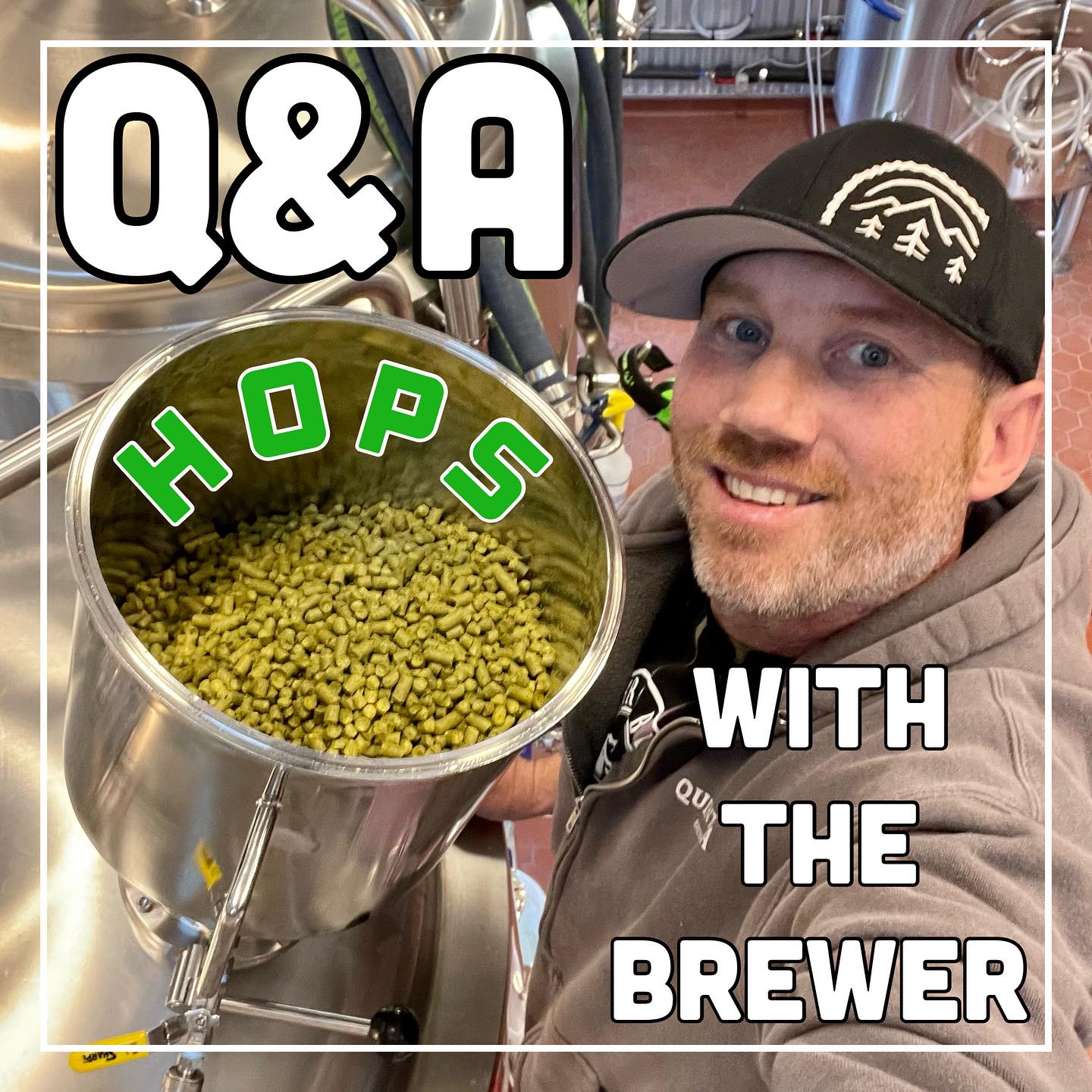
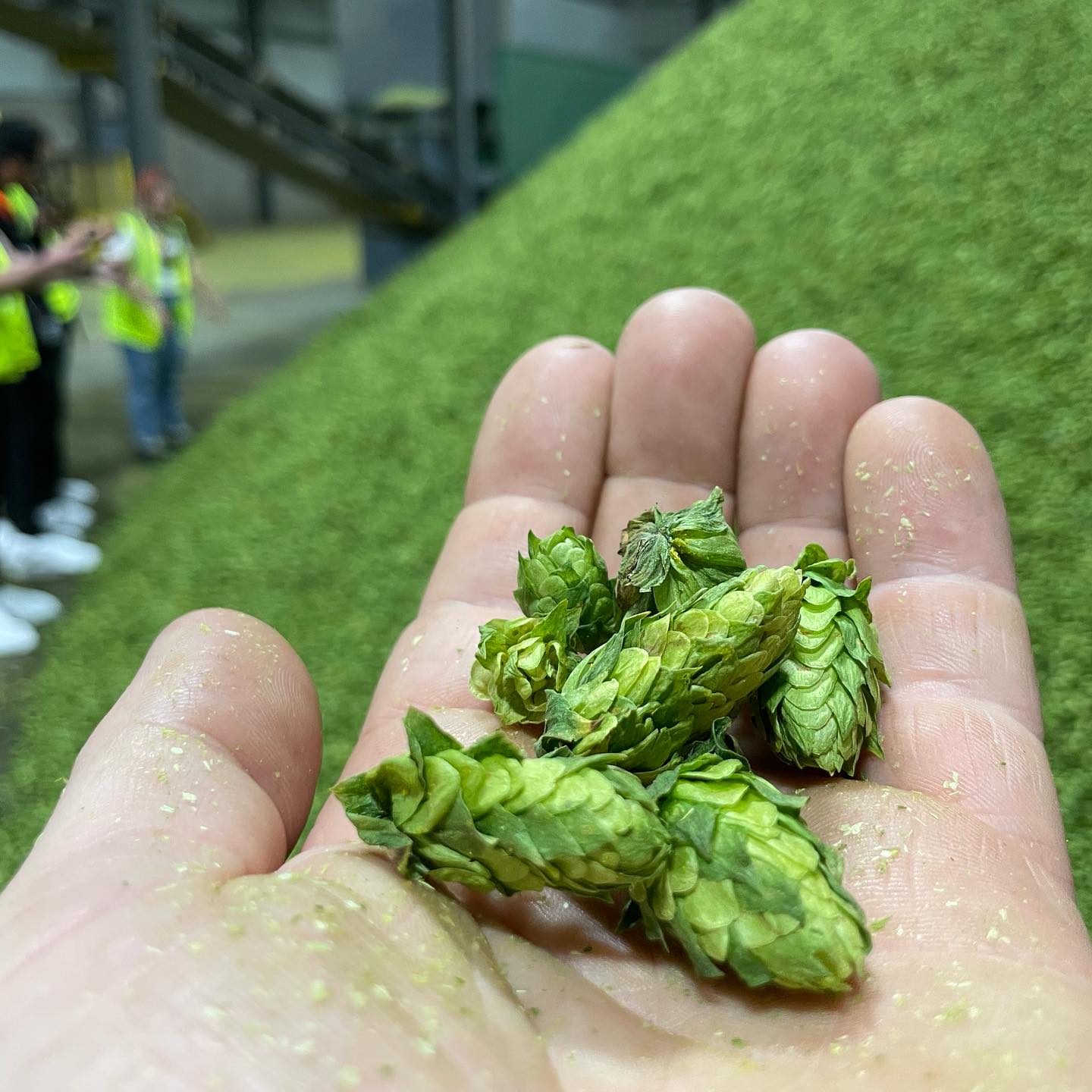
Introducing … Q & A with the brewer! As Quincy’s first and only brewery since Prohibition, Quintopia is excited to rekindle the relationship between their customers and the brewery/brewing process. This summer, after years of rebuilding after fire loss, they will once again be able to invite guests to view the brewing tanks and equipment in their new building while enjoying food and beer. To go along with that, they are starting this ongoing Q & A series with their Founder and Brewer, for those interested in learning a little more about the process behind this beloved beverage. To kick things off, Tom explains HOPS!
Hops are used to impart a unique aroma, flavor and bitterness to beer, depending when and how it is used in the beer process - which in turn is dictated by the style we are making. But hops doesn’t necessarily mean bitterness! Read on…
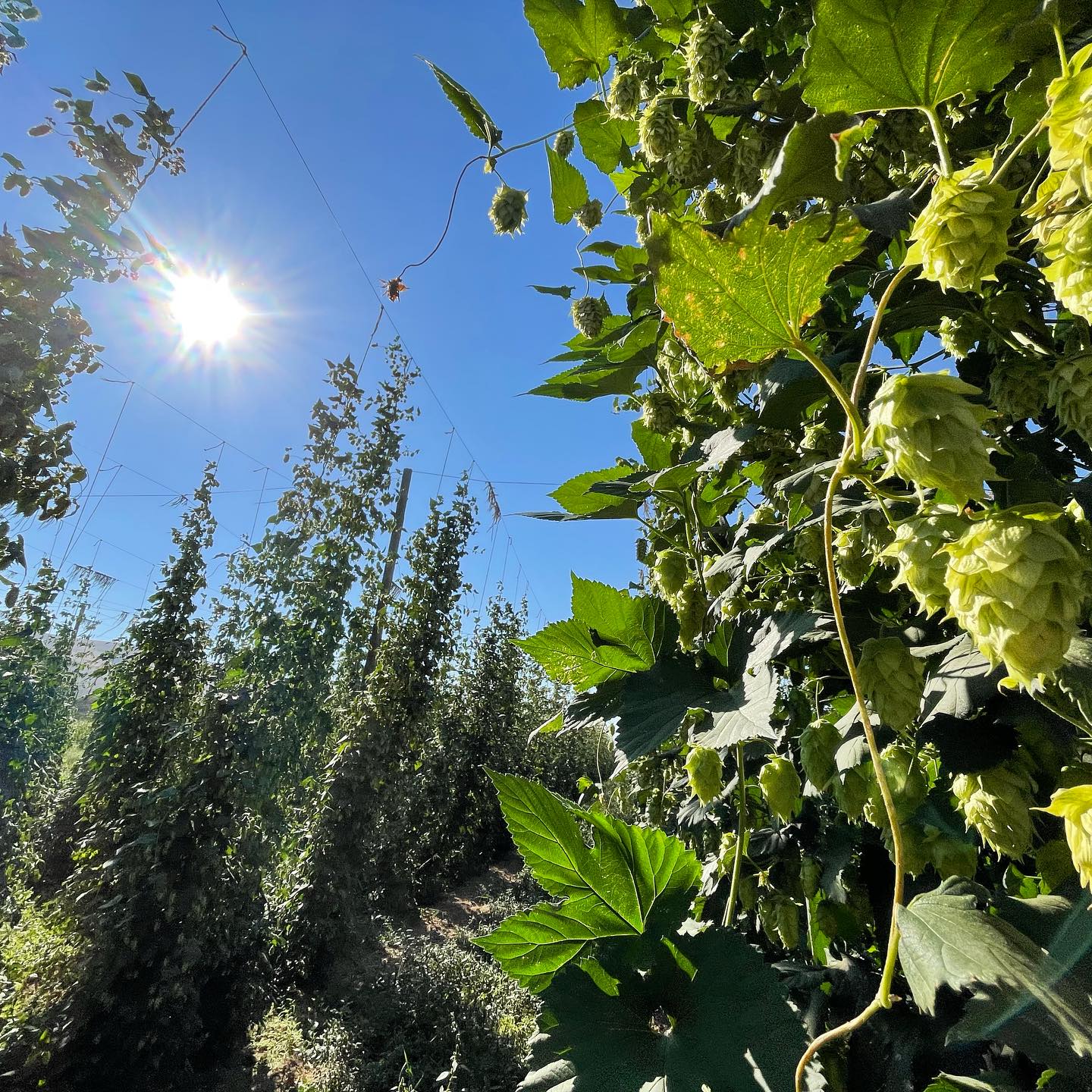
Hops are the reproductive cone of Humulus lupulus, a close relative of Cannabis. They are grown all over the world and are native to many areas. In brewing, the cones are stripped from tall bines (AKA vines) and dried. The papery cones can be used whole, or more commonly ground up and pelletized for ease of storage, shipping and brewing…
There are hundreds of varieties of hops! Some are old-school and have been around for decades or even centuries, whereas others come from modern breeding programs and are the cool-kids on the block - costing a fortune and getting brewers and consumers all hyped up! Most domestic hops are grown in the Pacific Northwest, and US hops are often famous for pungency and outrageous flavor/aroma contributions. This is often in contrast (generalizing for a moment) to the more subtle, old-world European varieties, some of the oldest and most classic of which are called ‘noble’ hops.
Broadly speaking, in brewing, there’s the ‘hot side’ additions (the boil-kettle or whirlpool) and optional ‘cold side’ additions (into the fermenter). The hot side is mostly responsible for the bitterness contribution, where alpha acids (the bitter stuff) need time at boiling temperatures, with the sugary pre-fermenter wort, to become soluble. Flavor is imparted as well, but much of the delicate hop aromatics drift away with the heat and steam! If we want those aromatics we need to dry-hop…
‘Dry-hopping’ is a confusing term, that I’ve never much liked. But imagine making cold-brewed coffee or tea. Hops are dropped directly into the fermenter on top of the cool and finished, or nearly finished, beer. Every brewery has their methods and tricks, such as temperature and length of time the hops steep. The result can range from subtle through to intense aromatics, with an enormous range of descriptors - fruity, piney, dank, catty, floral, spicy… to name a few.
Modern (for centuries) beer really wouldn’t be quite as we know it, without hops. The bittering - levels vary with styles - help balance any residual sweetness, and the flavors and aromas add complexity. Hops is also a natural preservative! However, many consumer have some misunderstanding or preconceptions about what hops are and how they’re used, along with a strong opinion about liking ‘hoppy’ beer or not. keep an open mind! We like to ask customers to clarify - what don’t they like about ‘hoppy’ beers? Most of the time they don’t like the bitterness. Ok, well guess what? Hoppy doesn’t have to mean bitter! For example our THZ, or Madrone Hound, are big on the aromatics but very moderate on the bitterness. So even if you don’t consider yourself a ‘hop head’, don’t discount hop-forward beers altogether. You might be surprised. Hops don’t just mean IPA’s!
Hops are an enormous agronomic industry, and American breweries are famous for pushing the limits of their use. They sure do keep brewers and consumers intrigued and interested, as new varieties are developed or come and go from fashion. May the hops be with you!